Second Brain Sub-10ms: Persistent Memory and AST LSP
Agents forget architectural decisions between sessions. Here is how a Second Brain with sub-10ms SQLite WAL and AST LSP provides instant precision.
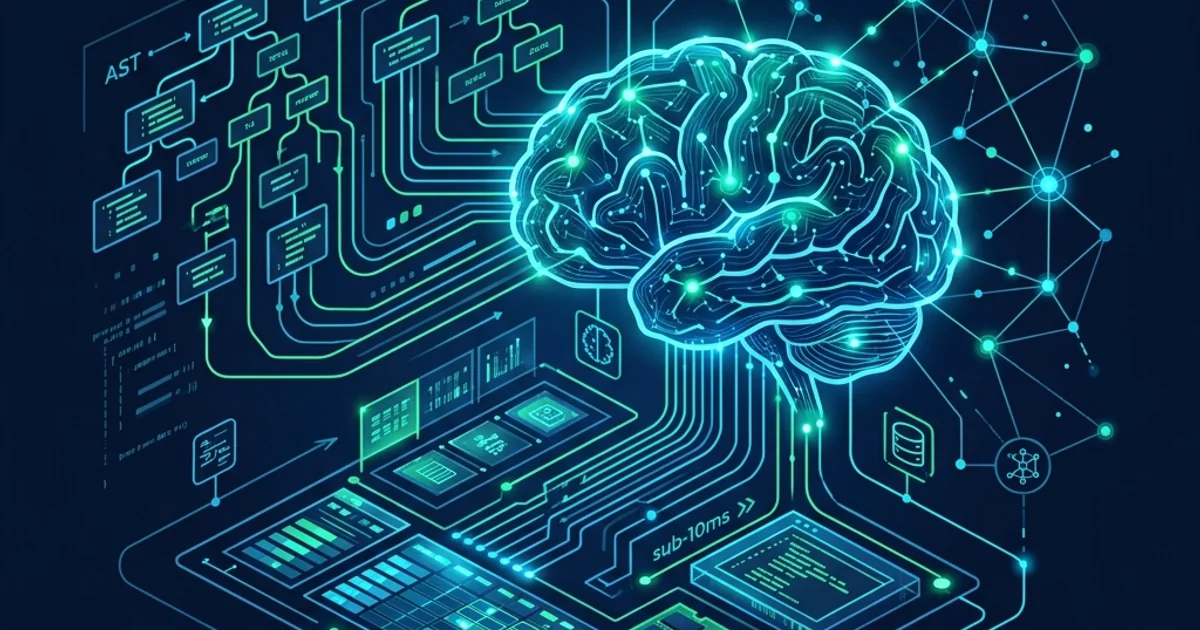
Table of Contents
You explain your authentication architecture to your coding agent in the morning. Without a persistent second brain layer, you open a new session in the afternoon and the agent asks from square one: "Should we use JWTs or session cookies?" You retype the explanation, only for the agent to suggest a conflicting pattern tomorrow.
Your agent is not incompetent. The runtime simply lacks a persistent storage layer to carry decisions across sessions.
Why a Second Brain and AST LSP Outperform Standard Grep
The standard approach to code search is predictable: run grep -r "handleAuth" . and inspect matches sequentially. The fundamental limitation is that grep matches raw text, not code structure.
Three recurring failure modes emerge:
- Identical identifiers, distinct semantics. A
getUserfunction in your billing package matches identically togetUserin authentication, despite enforcing completely different interface contracts. - Comment and string false positives. Documentation lines mentioning deprecated function names appear as hits, leading the agent into wrong files.
- Truncated terminal buffers. Long search outputs get truncated mid-stream. The model draws conclusions from fragmented data rather than complete context.
The bigger risk is path hallucination. An agent claims it refactored src/services/auth.ts, even though the file never existed. The claim sounds plausible because language models synthesize text based on probability, not physical abstract syntax trees.
Text matching versus semantic understanding
Regex answers: "Where does this character sequence appear?" The question engineers actually need answered is: "Where is this symbol declared, which callers reference it, and what are its concrete types?"
Answering that requires a parser. It requires an Abstract Syntax Tree (AST), not character matching. That is where AST and the Language Server Protocol (LSP) become indispensable.
The Advantage: One Database, Two High-Precision Paths
ACS Core runs the Sovereign Second Brain™ on an in-process SQLite WAL database. Two capabilities operate inside the same file, both returning results in under 10 milliseconds.
Path one, contentless trigram code search. Workspace files are indexed into trigram tokens rather than raw file bodies. The database stores file paths, line numbers, and token offsets. Zero bytes of source code are copied into the database.
The architectural benefit is clear: index size remains tiny even on massive enterprise codebases. Search queries execute across token tables in milliseconds instead of scanning raw disk files.
The output returns three lines of context per hit with exact line numbers. Build artifacts and vendor directories like node_modules/, dist/, and .git/ are filtered automatically.
Path two, architectural decision memory. Team conventions, architectural decisions, and verification proofs persist as structured nodes tagged by category and semantic relations. When decisions change, historical entries are marked superseded rather than deleted, preserving an audit trail.
Agents persist knowledge automatically. When tasks finish, key decisions commit through dual-path synchronization across kanban states and PRD blueprint records.
Automated recall, zero manual lookups
Agents do not need manual instructions to query memory. Before a prompt executes, an automated hippocampus hook retrieves relevant context. Cached queries resolve in under 0.5 milliseconds.
If the cache misses or times out, the hook fails open gracefully. It never stalls prompt execution, never triggers unprompted reindexing, and never emits console errors. Work proceeds uninterrupted.
New sessions never start from zero. The agent recalls constraints agreed upon days earlier without manual prompting.
AST-driven LSP: Navigation without guesswork
Alongside persistent memory, ACS embeds an in-process AST LSP engine:
jump-to-definitionnavigates directly to physical symbol declarations rather than string matches.hoverreveals type signatures and documentation without opening source files.find-referencestracks callers accurately across packages and import aliases.renamerefactors identifiers across the codebase without corrupting comments or string literals.
Everything runs from a single standalone binary. There are no external language servers to configure, no background Node daemons, and zero Python runtimes to maintain.
Memory Schema and Recall Governance
Here are the table architectures, delta-indexing rules, and recall sequences deployed in our production environments.
Second Brain Database Schema and Trigram Indexing
When Permanent Memory Delivers Real Value
In small repositories with short, single-session tasks, permanent memory provides marginal utility.
Its value compounds in large codebases, multi-engineer teams, and multi-day agentic workflows. Sub-10ms code search replaces tedious grep triage, and persistent decision logging stops AI agents from revisiting settled architectural debates.
To explore how persistent memory integrates with our broader toolchain, visit the ACS features overview. To review database schemas and licensing options, visit the pricing page. Review the Language Server Protocol architectural specification on Microsoft LSP Specification ↗.
Related Articles
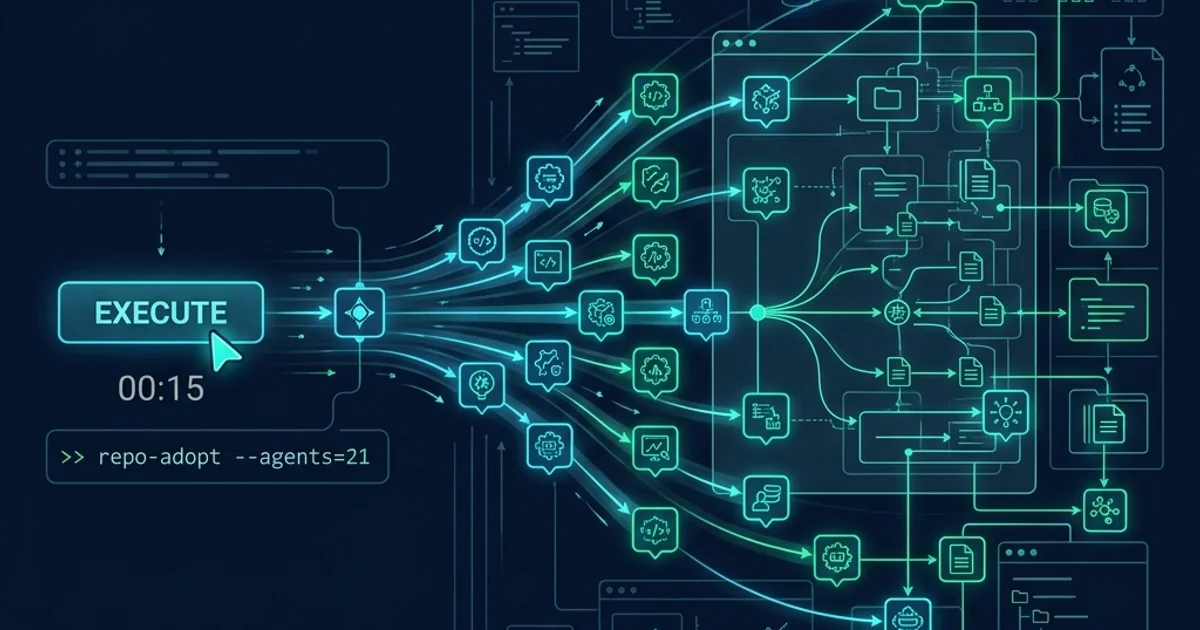
Inside acs adopt: Deploy 21 Specialized Agents in 15s
Onboarding should not take days. Here is how acs adopt inspects your stack and provisions 21 specialized agents and 7 reflexes in 15 seconds.

Bypass Cloudflare Turnstile with Stealth Browser MCP
Stock Puppeteer hits 403 blocks in seconds. Here is how a Tri-Engine Stealth Browser MCP reliably bypasses Cloudflare Turnstile defenses.

Automated TDD RGR: Stopping False Completion Claims in AI
Agents claim tasks are complete right before code crashes. Here is how strict TDD and an independent verification air-lock enforce empirical test evidence.
💬 Community Comments
Community discussion coming soon
Comments for “Second Brain Sub-10ms: Persistent Memory and AST LSP” are not enabled in this version. Say hi via GitHub meanwhile.