Bypass Cloudflare Turnstile with Stealth Browser MCP
Stock Puppeteer hits 403 blocks in seconds. Here is how a Tri-Engine Stealth Browser MCP reliably bypasses Cloudflare Turnstile defenses.
Table of Contents
Your automation script runs fine locally. But when pointed at the target site, it immediately hits a 403 Forbidden error with an endless Cloudflare Turnstile spinner. You change the user-agent string. You pass --no-sandbox. You switch to headful mode. You still get blocked.
The frustrating part: the exact same URL opens cleanly in your personal Chrome browser. Same code, same IP address, completely different outcome.
Most engineers conclude that Cloudflare is just too smart. But detection is automated. A modern anti-bot system evaluates dozens of telemetry signals within the first 200 milliseconds to trigger Cloudflare Turnstile. Most of those signals come from how the browser process starts, not from your request payload.
Bypassing Cloudflare Turnstile: Why Stock Puppeteer Fails
Puppeteer and Playwright drive Chrome through the Chrome DevTools Protocol (CDP). That protocol leaves distinct fingerprints inside the DOM that client-side JavaScript can inspect easily.
Three common leaks trigger instant detection:
navigator.webdriverevaluates totrue. The browser explicitly flags itself as automated.- The
window.chromeobject is incomplete or missingchrome.runtime, despite claiming to be modern Chrome. - Error stack traces expose CDP artifacts like
Runtime.evaluateinstead of native page origins.
All three are trivial to detect. A single line like if (navigator.webdriver) return block(); shuts down thousands of automated bots every second.
The deeper layer: TLS fingerprinting
Before JavaScript even executes, the server inspects the HTTPS handshake. Cipher suites, TLS extension order, elliptic curves, and session ticket lengths form a unique fingerprint known as JA3 or JA4.
Node.js links against OpenSSL. Its extension order differs fundamentally from real desktop Chrome. Even if your User-Agent header claims "Chrome 131", your TLS handshake announces "Node 20". That mismatch triggers an immediate high-risk score.
Cloudflare cross-references three layers simultaneously: TLS handshake signatures, HTTP/2 frame headers, and JavaScript probes. If any single signal deviates, Turnstile displays an interactive challenge.
Canvas, WebGL, and static noise
Canvas fingerprinting measures pixel rendering across 2D shapes, text metrics, and gradients. On headless machines using virtual GPU drivers, rendering outputs match identically across thousands of virtual machines. Perfect uniformity is an immediate red flag.
The same rule applies to WebGLRenderingContext parameters and installed system font lists. Real physical devices exhibit subtle variations. Automation runners produce identical values, which acts as a reliable bot signature.
ℹ️Catatan
Patching individual flags is not enough. Modern detectors evaluate signal consistency across all layers, not isolated boolean variables.
What Happens When You Monkey-Patch Manually
The standard workaround is well known: inject Object.defineProperty(navigator, 'webdriver', { get: () => false }) and fake chrome.runtime. This might work for a few days. Then the target updates its heuristic models, and your scraper breaks again.
The real cost is ongoing debugging time. You also face regression risks on every Chrome version bump. Your custom JavaScript overrides depend on undocumented browser internals that change without warning.
Maintaining that fleet of patches turns into maintaining your own browser fork. That is not how engineering teams should spend their time.
The Advantage: Three Engines Behind One MCP Server
ACS Core bundles a Tri-Engine Stealth Browser MCP directly into the binary. Three engines address different layers of anti-bot detection:
- CloakBrowser serves as the primary engine. It runs headless Chromium with an integrated cloaking layer for hardware fingerprints, timezones, and locales. It provides 80 tools for DOM accessibility snapshots, cookie control, network interception, and persistent profiles.
- Camoufox activates when targets reject Chromium runtimes altogether. It is an anti-detect Firefox fork, meaning its TLS fingerprint and engine signatures are entirely non-Chromium.
- SeleniumBase serves as the final fallback for interactive challenges that require humanized mouse trajectories.
Your AI agent does not need to know which engine is active. It interacts with a single unified Model Context Protocol interface.
Once connected, your agent gains access to roughly 80 deterministic tools: browser_navigate, browser_snapshot, browser_click, browser_fill_form, browser_wait_for, and browser_network_requests.
The control flow remains compact. Navigate to the page, grab an accessibility tree snapshot, target elements by role and name, and verify the state. If authentication is needed, persistent profiles keep session cookies intact across subsequent tool calls.
Sub-2ms stdio latency
ACS communicates via in-process stdio RPC rather than a separate HTTP daemon. Control calls return in under 2 milliseconds. Page rendering time depends strictly on the target site. There are no open network ports to secure and no standalone Python processes to keep alive.
The practical impact: an AI agent can execute multi-step workflows without context drift, and you never have to babysit background processes that crash silently.
Production Stealth Configuration
Here are the stealth profile specifications, session rotation caps, and fallback sequences we use for targets running high-tier Turnstile verification.
Cloudflare Turnstile Configuration Blueprint
When to Use a Stealth Browser MCP
If a service provides an official API, always use the API. A stealth browser is never a substitute for a clean system integration.
Legitimate use cases include:
- Running end-to-end tests on your own Turnstile-protected staging environments without disabling production security rules.
- Validating checkout pipelines and account onboarding funnels that require real browser execution.
- Conducting competitive market research on public web pages that inadvertently block non-browser clients.
Never use stealth tooling to bypass paid access barriers, forge financial transactions, or harvest private personal data without consent.
Explore the Architecture
To see how the browser suite integrates with our broader toolchain, explore the MCP Arsenal overview. The platform ships with six ready-to-run modules, including stealth browser automation, AST code intelligence, and persistent second-brain memory.
To review licensing tiers and activation details, visit the pricing page. A single perpetual license grants full access to all configurations in this guide and ongoing engine updates as anti-bot models evolve. Review the official security model at Cloudflare Turnstile ↗.
Related Articles
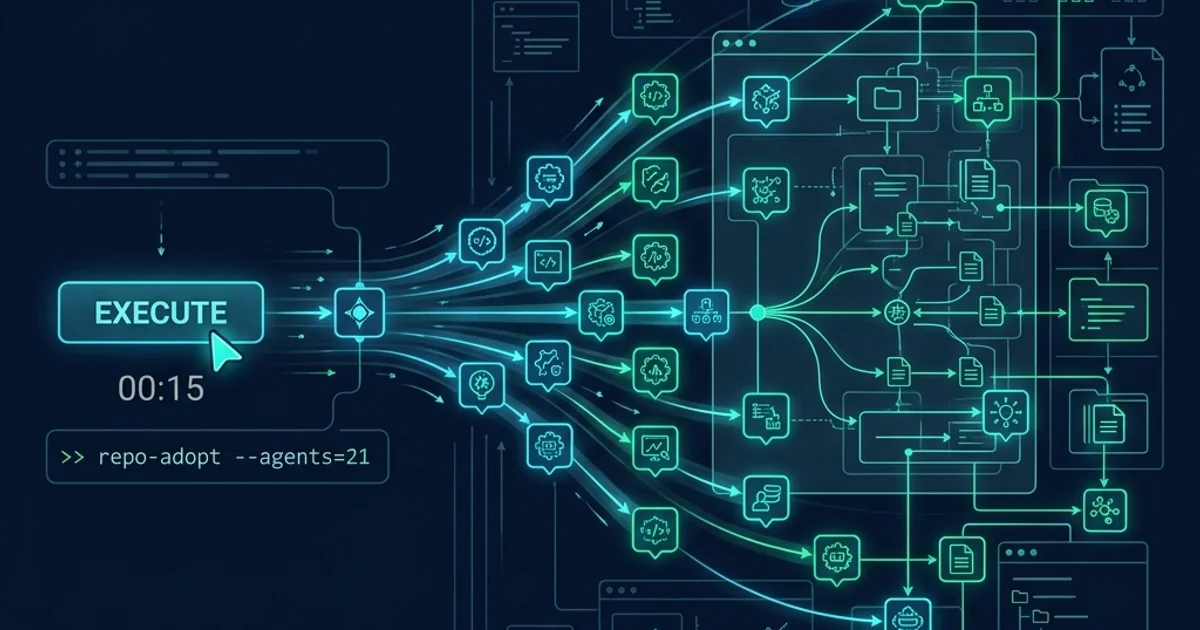
Inside acs adopt: Deploy 21 Specialized Agents in 15s
Onboarding should not take days. Here is how acs adopt inspects your stack and provisions 21 specialized agents and 7 reflexes in 15 seconds.

Automated TDD RGR: Stopping False Completion Claims in AI
Agents claim tasks are complete right before code crashes. Here is how strict TDD and an independent verification air-lock enforce empirical test evidence.
Exit Code 2: Prevent File Collisions Across AI Terminals
Parallel Claude Code terminals overwrite shared files and ruin git trees. Here is how Decoupled Swarm Mesh fires Exit Code 2 before collisions occur.
💬 Community Comments
Community discussion coming soon
Comments for “Bypass Cloudflare Turnstile with Stealth Browser MCP” are not enabled in this version. Say hi via GitHub meanwhile.