What Is ACS? The Complete Guide to Local AI Agent Orchestration for Beginners
Far more than a simple token-saver. A comprehensive breakdown of Agnostic Config Suites (ACS), how it orchestrates Claude Code and Hermes, and the first 5 steps to start.
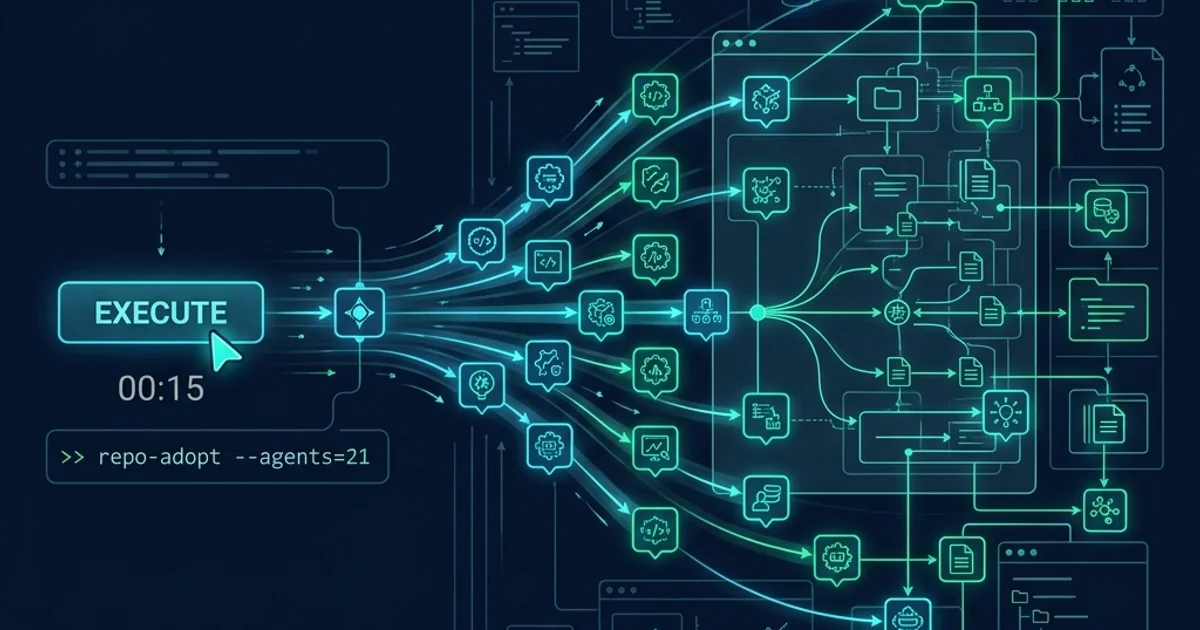
Table of Contents
"What exactly is the primary function of ACS? Is it a standalone AI model? Can it act as a provider for Hermes? When I purchased it, I assumed it was just a token cost optimizer..."
Questions like these frequently arise from developers exploring Agnostic Config Suites (ACS) for the first time. In an industry flooded with flimsy prompt wrappers and questionable proxy resellers, it is easy to assume ACS is just another token-saving utility.
Optimizing token consumption is merely the outer layer. Saving token costs does little good if your AI agents loop aimlessly, falsely declare tasks completed before running unit tests, or suffer context amnesia by turn fifteen.
Let us dissect what ACS truly is, how it operates on your local machine, and why modern software engineers rely on it to build production-grade applications.
💡 What Is ACS Exactly?
In short: ACS is not a new AI model, and ACS is not a separate AI agent competing with Claude Code or Hermes.
ACS is a Local Operating System & Runtime Orchestration Engine providing an intelligent bridge (_control plane & data plane_) between your AI developer terminals (Claude Code CLI, Hermes, Antigravity Desktop, Cursor) and your physical workstation.
Consider this analogy:
- Foundational LLMs (Gemini 3.8 Flash series:
ag/gemini-3.8-flash-high,ag/gemini-3.8-flash-medium,ag/gemini-3.8-flash-low,ag/gemini-3.8-flash) are the racing engine—delivering high-velocity reasoning, massive context limits, and unmatched rate-limit resilience when hammered across multiple concurrent agent sessions. - Claude Code CLI & Hermes are the steering wheel and chassis.
- ACS Core is the entire automated transmission, high-speed suspension shock-absorbers, electronic control unit (ECU), and predictive telemetry that allow the vehicle to corner smoothly at 200 km/h without spinning out or running dry on fuel.
Without ACS, you must manually coordinate dozens of fragmented JSON files, wrestle with fragile caching layers, juggle API keys prone to HTTP 429 limits, and write bespoke agent guidelines for every new repository. With ACS, all underlying operational friction is handled automatically in the background.
⚙️ How ACS Operates on Your Machine
ACS adheres strictly to a local loopback Dual-Port Single Source of Truth (SSOT) design (127.0.0.1), ensuring zero code or prompt telemetry is transmitted to third-party cloud servers (_zero cloud leakage_):
Four foundational pillars power this ecosystem:
1. 9router Shock-Absorber (http://localhost:20128)
The high-throughput model gateway. 9router shields your workstation from upstream volatility:
- Intelligent Model Combos & Fallback Chains: Chain priority cascades across resilient Gemini tiers (e.g.,
ag/gemini-3.8-flash-high➔ag/gemini-3.8-flash-medium➔ag/gemini-3.8-flash-low➔ag/gemini-3.8-flash). If your primary tier hits rate limits (HTTP 429) or transient upstream throttles, 9router diverts queries downstream within milliseconds without terminating your session. - Automatic Vision Adapter: When your text-only coding model receives an image prompt (such as a UI bug screenshot), 9router seamlessly reroutes the request to a vision-capable model in your pool.
- Error 403 Mitigation & Account Isolation: Manage multiple Google Antigravity accounts or custom provider endpoints with automatic failover.
2. ACS Dashboard (http://localhost:20130)
Your visual administrative cockpit:
- Inspect gateway health, background daemons, and node-lock licenses offline.
- Configure Claude Code CLI settings visually with zero syntax errors.
- Tune context window pinning (1M tokens), auto-compaction watermarks (45%), and one-click model presets.
3. Multi-Agent Swarms & Autonomous Engineering Rigor
ACS transforms raw LLM terminals into a coordinated software engineering team:
- Role Specialization: Launch one terminal with
/ankeacting as the executive CEO/Lead Orchestrator, and another with/daanserving as the Chief Systems Architect. - Structured Execution Gates: Your agents follow proven reflexes. Small edits (1–2 files) run directly under strict TDD (Red-Green-Refactor). Larger, multi-module architectural tasks trigger a hard requirement to author PRD Blueprints and track progress on an integrated Kanban board.
4. Sovereign Second Brain & Sub-10ms Memory
Agents frequently forget prior context past turn 15. ACS embeds a local SQLite WAL FTS5 memory database (acs-memory):
- Architecture decisions, research articles, and past bug remediations persist permanently on your disk.
- Sub-millisecond trigram search (
search_codeandsearch_memory) allows agents to retrieve exact historical knowledge instantly without wasting thousands of tokens re-reading entire project repositories.
🚀 Day 1 With ACS: The 5 Essential Steps
Many newcomers experience a common initial hurdle: _"The dashboard is running, but clicking Test Model returns an API key error!"_
This occurs simply because no model account has been connected to 9router yet. Follow these five sequential steps for a seamless Day 1:
- Step 1: Authorize Accounts / Input API Keys in 9router (
:20128)
Navigate to http://localhost:20128/dashboard/providers. Connect your Google Gemini Antigravity account (giving instant access to ag/gemini-3.8-flash-high, medium, and low). Verify the status indicator turns green.
- Step 2: Verify Inference in ACS Dashboard (
:20130)
Navigate to http://localhost:20130/agentic/claude. Click Test. A green checkmark (✓ 2316ms) confirms your inference pipeline is operational.
- Step 3: Open Your Project in a Modern Terminal (WezTerm)
In File Explorer, open your project directory, right-click, and select "Open in WezTerm" (or your preferred terminal emulator).
- Step 4: Launch Your Agent CLI
Type claude (for Claude Code CLI) or initialize your Hermes session.
- Step 5: Issue the Foundational Command
Type this instruction into your agent prompt:
Within 15 seconds, your AI agent will scan your project stack, establish deterministic CLAUDE.md rulesets, connect local MCP tools, and elevate itself into a world-class engineering partner.
🎯 Next Steps
Adopting ACS is not merely about slashing your monthly API expenditure by up to 90%—it is about taking full sovereign command of your development workflow. No more hallucinations, no more hours lost to repetitive configurations, and no more intellectual property leaking to third-party cloud logs.
Ready to explore the complete step-by-step onboarding walkthrough?
- Check out the official Day 1 Quickstart for Beginners in our Member Portal.
- Do not have a license yet? Secure your lifetime access at our ACS Core License Page before early bird tiers close!
Related Articles
Inside acs adopt: Deploy 21 Specialized Agents in 15s
Onboarding should not take days. Here is how acs adopt inspects your stack and provisions 21 specialized agents and 7 reflexes in 15 seconds.
Bedah Arsitektur acs adopt: 15 Detik Deploy 21 Agen
Onboarding repo lama nggak perlu berhari-hari. Satu perintah acs adopt memindai stack, menyuntik 21 persona agen dan 7 refleks otonom dalam 15 detik.
Bypass Cloudflare Turnstile with Stealth Browser MCP
Stock Puppeteer hits 403 blocks in seconds. Here is how a Tri-Engine Stealth Browser MCP reliably bypasses Cloudflare Turnstile defenses.
💬 Community Comments
Community discussion coming soon
Comments for “What Is ACS? The Complete Guide to Local AI Agent Orchestration for Beginners” are not enabled in this version. Say hi via GitHub meanwhile.